
Iron rods and structural steel
Reinforcement bars, sections and site steel for foundations, frames and slabs, supplied with the cement for the same job.
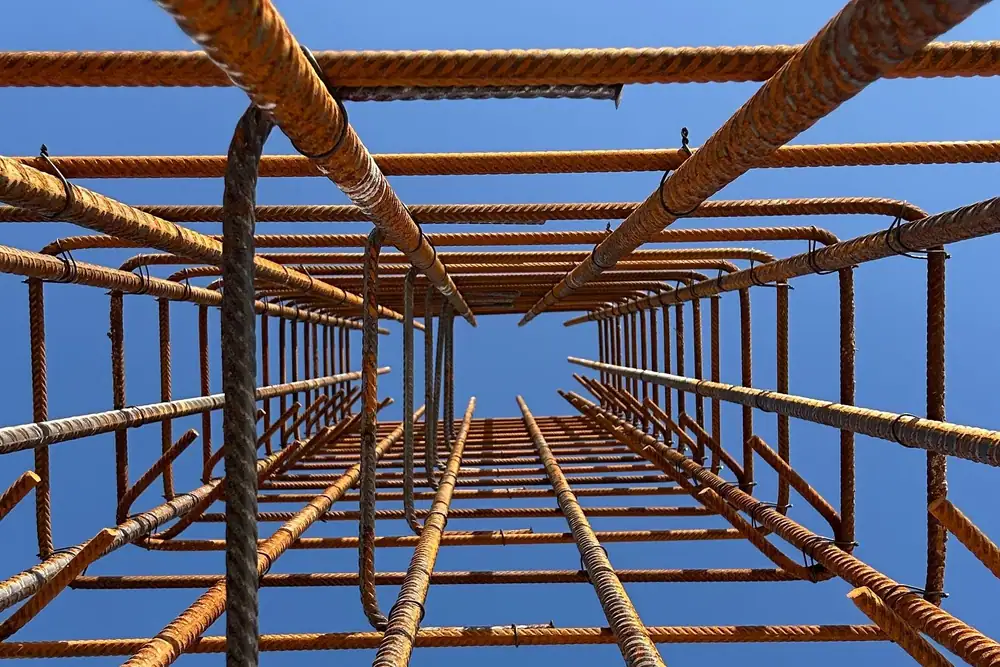
Pick a size, see its weight
Every rod is a 12 m length. Choose a diameter to see how heavy it is and how many lengths make up a tonne.
Slabs, lintels and small columns.
| Size | kg / m | kg / 12 m | Lengths / tonne |
|---|---|---|---|
| 8 mm | 0.395 | 4.74 | ≈ 211 |
| 10 mm | 0.617 | 7.41 | ≈ 135 |
| 12 mm | 0.889 | 10.67 | ≈ 94 |
| 16 mm | 1.580 | 18.96 | ≈ 53 |
| 20 mm | 2.469 | 29.63 | ≈ 34 |
| 25 mm | 3.858 | 46.30 | ≈ 22 |
| 32 mm | 6.321 | 75.85 | ≈ 13 |
Standard weights from d² ÷ 162 kg per metre. Bars from some mills weigh less.
More than reinforcement bars
Reinforcement bars
High-tensile ribbed bars in standard 12 m lengths, by the piece or by the tonne.
Angle iron
For frames, gates, burglary proofs, trusses and supports.
Beams and channels
Steel sections for long spans and heavy loads.
Binding wire
Annealed wire for tying rods on site, in rolls.
Pipes
Steel pipes for structure, fencing and water.
Nails
Wood and roofing nails in the common sizes.
To confirm Steel sources (local, imported, TMT) and cutting or bending service.
Steel questions
Do you sell iron rods by the tonne?
Yes. Order by the tonne or by the 12 m length. One tonne of 12 mm is about 94 lengths.
Why do two 16 mm rods weigh differently?
Bars from some local mills are lighter than the standard weight. Ask whether a price is per piece or per weighed tonne.
Can I order rods with cement on one truck?
Yes. Mixed loads of rods, cement and roofing are planned so they arrive together.